

Virality in 2025 isn’t luck — it’s psychology, algorithm signals, and AI-assisted structure. This tutorial explains what triggers viral content in 2025 on Instagram and TikTok, how to design retention-first stories, and how ChatGPT accelerates ideation, scripting, captions, and analysis.
Boost your reach with AI Content Ideas Generator for Reels & TikTok — instantly create hooks, scripts, and Reels formats that drive retention, saves, and shares. Explore all tools and services on FameLab SMM Services and see how top 2025 creators optimize content for virality.
Intro — What Triggers Viral Content in 2025: The Science #
What Triggers Viral Content in 2025. Ask “what triggers viral content in 2025?” and you’ll find three answers: emotion, curiosity, and distribution. In 2025, virality isn’t luck — it’s designed. Every algorithm (Instagram, TikTok, YouTube Shorts) now amplifies what maximizes watch time, saves, and DM shares — the real growth levers that outperform likes or comments.
Top creators no longer rely on “posting more.” They reverse-engineer the viral feedback loop: emotion → curiosity → retention → shares → algorithm boost. Each loop compounds visibility and feeds back into the next post. AI tools like ChatGPT and Gemini are now crucial — helping creators test hundreds of hooks, scripts, captions, and posting times in hours, not weeks.
Big idea: Virality isn’t about chasing the algorithm — it’s about designing for resonance. Platforms amplify patterns of human behavior, not random creativity.
Where many brands and creators fail is mistaking views for resonance. Viral content in 2025 isn’t just seen — it’s remembered, rewatched, saved, and shared. The difference is in intent design: content that reflects identity, provokes reaction, and rewards attention. HubSpot’s 2025 benchmarks show that posts with high “emotional density” (multiple micro-emotions within 10 seconds) outperform static educational posts by 63 % in watch time and nearly double the save rate.
The most effective creators in 2025 blend psychology with AI workflow. They use AI to ideate, script, analyze, and optimize — but never to replace human storytelling. Every viral framework begins with a simple rule: emotion first, algorithm second. AI doesn’t make your content viral — it makes your creative process repeatable.
Viral Psychology in 2025: What Triggers Viral Content
#
People share for identity (“this is me”), connection (“you must see this”), and status (“I found this first”). Every share is a signal — a reflection of self-image, emotion, and timing. Understanding what triggers viral content in 2025 often comes down to recognition, novelty, validation, and social currency. The best creators don’t guess these triggers — they design content intentionally to hit them.
- Recognition: “That’s so me.” — Relatable posts get 2× more DM shares and comments.
- Novelty: A new angle or unexpected insight triggers curiosity and replays.
- Validation: Confirming a viewer’s beliefs encourages saves — people keep what they agree with.
- Discovery: Teaching something surprising fuels share pride (“I found this first”).
Pro insight: HubSpot’s 2025 data shows that content evoking both recognition and curiosity drives 3.2× higher share rates. Combining familiarity with tension makes viewers stop scrolling.
Example #1 — Recognition Trigger
“When you open Instagram just to take a 5-minute break… and it’s suddenly midnight.” 👉 Viewers share because it mirrors their own habits — self-recognition drives connection and shares in 2025.
Example #2 — Novelty Trigger
“Instagram Reels aren’t competing with your attention — they’re training it.” 👉 A fresh perspective triggers curiosity and discussion, key to viral content in 2025.
Example #3 — Validation Trigger
“You don’t need 10k followers — you need 100 people who comment every time.” 👉 Affirms beliefs — validation builds loyalty, saves, and viral reach in 2025.
Example #4 — Discovery Trigger
“The sound that made 4 brands go viral last week — and why.” 👉 Taps insider curiosity and dopamine of discovery — perfect for Reels or TikTok in 2025.
Example #5 — Contrast Trigger
“Everyone says post daily — here’s why skipping can actually boost engagement.” 👉 The unexpected contrast surprises the brain — a powerful retention and share driver in 2025.
Example #6 — Emotion Spike Trigger
“This tiny act of kindness went viral in under 24 hours.” 👉 Micro-emotional moments trigger awe and empathy, increasing replays, shares, and saves on Instagram and TikTok.
Viral psychology is the bridge between storytelling and algorithmic success. Understanding what triggers viral content in 2025 helps your audience feel smart, seen, or emotionally rewarded. The job of content is not just to inform — it’s to give your audience something they’d be proud to share with others.
Emotional Triggers in 2025: What Triggers Viral Content
#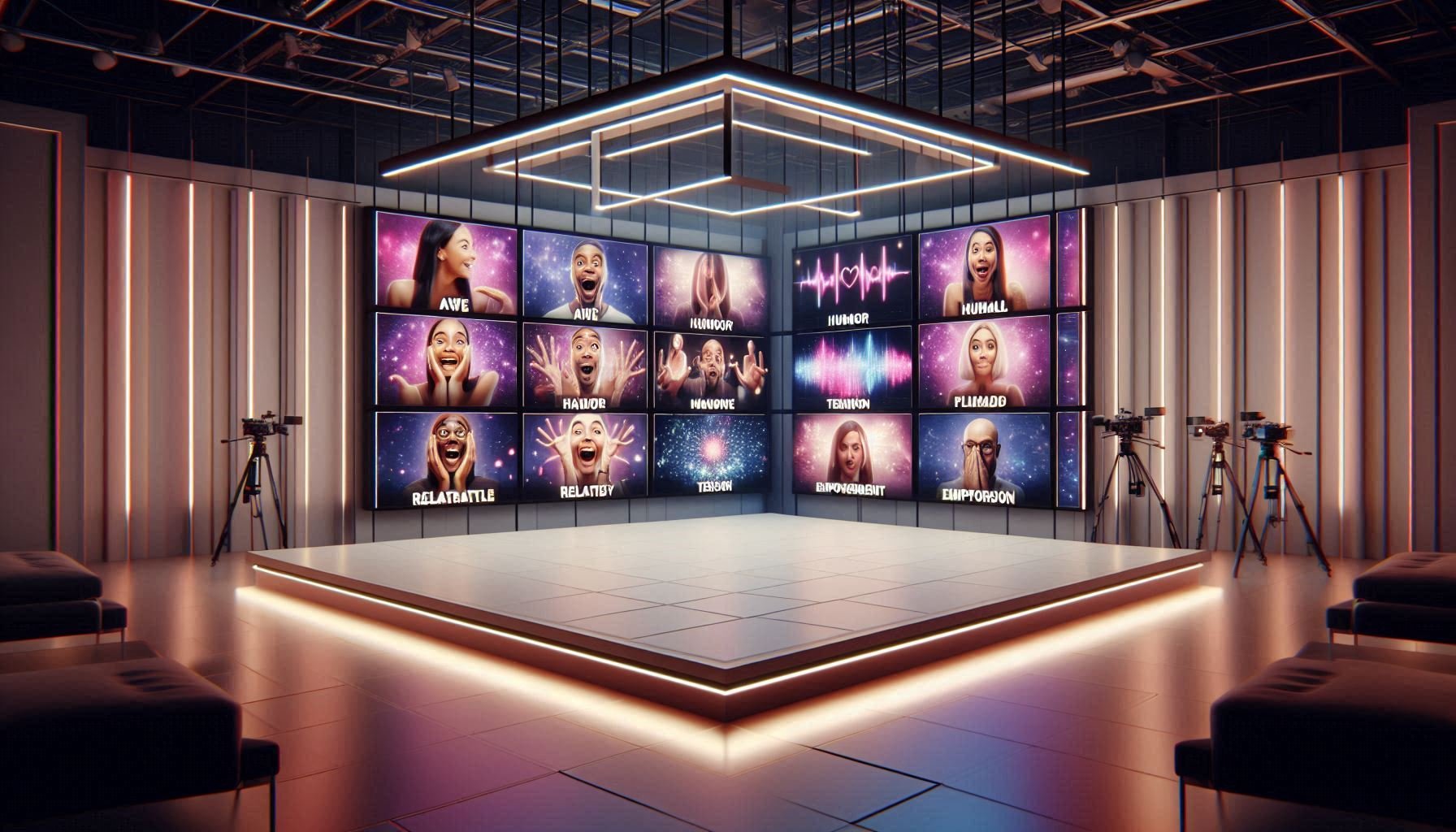
Emotion is the real algorithm. Understanding what triggers viral content in 2025 is about more than trends — it’s about emotional density per second. Each frame, phrase, or caption delivers a small hit of feeling: awe, humor, relatability, empowerment, or strategic tension. Content that makes viewers feel quickly stops the scroll, encourages replays, and drives shares — exactly what the algorithm rewards in 2025.
Across Instagram and TikTok, posts that drive virality aren’t always the most creative — they are the most emotionally calibrated. Micro-moments of surprise, joy, or recognition spike retention and save rates. Even a 1–2 second burst of emotion can boost watch time by over 35% according to 2025 Meta benchmarks.
| Trigger | Best Used For | Expected Signal | Risk / Common Mistake |
|---|---|---|---|
| Awe / Wonder | Transformations, “before → after” journeys, big reveals, time-lapse results. | Replays, Shares, Comments (“how did they do that?”) | Feels fake if payoff is weak. Avoid clickbait “shock” — deliver earned wow, not empty spectacle. |
| Relatability | Everyday truths, shared frustrations, small wins (“this is so me”). | Comments, Saves, Tagging friends | Overused in lifestyle content — loses impact if too generic or impersonal. Be hyper-specific to spark “that’s exactly me” moments. |
| Humor | Edutainment, timing-based gags, “pain turned funny”, meme reframes. | Retention, Shares, Return Views | Humor ages fast. Avoid overused viral formats. Focus on relatable humor tied to your niche. |
| Empowerment | Proof-driven motivation, progress stories, audience encouragement. | Shares, Follows, Comments | Generic positivity kills trust. Use real data, progress, or results for credibility. |
| Outrage / Tension | Challenging assumptions, controversial truths, or pattern breaks. | Comments, Reposts, Algorithmic reach spikes | Don’t provoke for drama. Channel tension into insight or constructive debate. |
Example #1 — Awe Trigger
“This 7-second clip took 4 months to make.” 👉 Creates temporal awe and visual curiosity that compels replays — key for viral content in 2025.
Example #2 — Humor Trigger
“POV: You try to post daily for 30 days and start narrating your own life.” 👉 Turns burnout into relatable satire, a safe, sharable, and viral emotion mix.
Example #3 — Empowerment Trigger
“You don’t need more followers — you need more consistency.” 👉 Simple, credible truth that fuels trust-based virality in 2025.
Pro tip: Layer emotional triggers — humor + recognition or awe + validation outperform single-emotion posts by up to 52%. Emotional variety keeps dopamine fluctuating, directly boosting retention and shares.
Emotion isn’t decoration — it’s the delivery system for your message. Understanding what triggers viral content in 2025 ensures your posts become memorable, rewatchable, and shareable. The future belongs to creators who design emotion per second, not just content per week.
Cognitive & Curiosity Triggers in 2025 — What Triggers Viral Content
#
Curiosity retains — confusion repels. Understanding what triggers viral content in 2025 means leveraging the brain’s drive to fill gaps. When audiences sense missing information, dopamine spikes — keeping them watching, reading, and rewatching. This mechanism, called the Information Gap Theory, allows creators to reset attention every 3–5 seconds via visual or narrative contrast.
What Triggers Viral Content in 2025. In practice, curiosity triggers follow three key cognitive patterns:
- Contrast: Start with tension (“myth vs truth”, “before vs after”) to engage the analytical brain.
- Open loops: Tease unanswered questions (“wait for the twist”) to keep viewers seeking closure.
- Micro-interrupts: Small changes — zooms, silence, or scene cuts — prevent attention from drifting.
Combined with emotional triggers, curiosity acts as a retention amplifier. Alternate predictability and novelty in a “pattern dance” to maintain engagement without fatigue — the ideal rhythm for 2025 social content.
| Trigger Type | Technique | Example in Use | Primary Effect | AI Prompt Idea |
|---|---|---|---|---|
| Contrast | “Myth vs Truth”, “Before vs After”, “Expectation vs Reality” | “Everyone says post daily — here’s why that kills your reach.” | Immediate attention spike | “Write 5 contrast hooks that challenge common beliefs in [niche].” |
| Open Loop | Question without immediate answer | “This tiny mistake cost me 100K views — but not for the reason you think.” | Retention through suspense | “Create 10 open-loop hooks with delayed payoffs for [topic].” |
| Pattern Interrupt | Sudden change in pacing, tone, framing, or format | Cut from calm narration → bold statement → visual zoom | Stops scrolling, boosts replay loops | “Suggest 5 visual interrupts to reset focus in 30s Reels.” |
| Knowledge Gap | Imply missing information (“most people miss this step”) | “Almost no one knows why this algorithm change matters — let me show you.” | Curiosity engagement & saves | “Generate 10 hooks using ‘missing step’ curiosity for [audience].” |
Example #1 — Cognitive Pull
“Everyone says the secret to growth is consistency. What if that’s why your account is stuck?” 👉 Opens a curiosity loop and challenges expectations — core to viral content in 2025.
Example #2 — Visual Interrupt
A silence or fast zoom at second 4 forces mental re-engagement. Algorithms detect this via retention curve recovery.
Example #3 — AI Prompt
“Create 10 short-form hooks combining curiosity gaps and pattern interrupts for Instagram Reels.” Use AI to vary structure and emotion intensity per second.
Pro tip: Average online attention is 7–8 seconds, but dopamine resets can extend it to 20–25 seconds. Alternate curiosity and satisfaction cues — each loop rewards the brain, driving retention and virality in 2025.
Curiosity isn’t manipulation — it’s momentum. When paired with emotional and algorithmic triggers, it becomes the invisible glue that keeps your audience watching, saving, and returning for more.
Prompt idea: “Give me 10 curiosity hooks and 5 pattern interrupts for a 30-sec Reel about [topic].”
Algorithm Triggers in 2025 — What Triggers Viral Content in 2025
#
Platforms in 2025 act less like social apps and more like behavioral scientists. Understanding what triggers viral content in 2025 means optimizing for signals that keep users mentally engaged and emotionally invested. The most important metric isn’t how many people see your post — it’s how long they stay and what they do next. Below are the top algorithmic triggers that drive distribution today.
| Signal | Definition | Why It Matters | AI Optimization Example |
|---|---|---|---|
| Watch Time / Retention | Average seconds viewed per user | The strongest algorithmic signal — defines post longevity. | “Analyze my Reel and identify where viewers drop off after second 3.” |
| Replay Rate | How often people watch twice | Shows cognitive tension and emotional satisfaction — key predictor of virality. | “Suggest pacing or visual tweaks to increase replay potential.” |
| Save Rate | Ratio of saves per reach | Signals long-term value — heavily weighted on Instagram and TikTok. | “Write 3 subtle CTAs that nudge users to save for later without clickbait.” |
| DM Shares | Private re-shares to friends | Strong “trust signal” — algorithms interpret it as high relevance within social graphs. | “Add a line that makes viewers say: ‘You need to see this.’” |
| Engagement Velocity | Comments & saves within first hour | Early performance signals the algorithm to boost content faster. | “Suggest first-hour engagement prompts that feel natural.” |
| Session Extension | Time users stay on the platform after viewing your post | Posts that prolong session earn priority distribution across platforms. | “Recommend related hooks or posts to extend session time.” |
Example #1 — Watch Loop Optimization
Add a mini-reveal near second 8 and echo it at second 14. This “micro-loop” doubles replay likelihood — algorithms read it as higher watch intent for viral content in 2025.
Example #2 — Save Trigger
End with “You’ll want this later” or “Bookmark before the update drops.” Subtle urgency improves save rate without clickbait.
Example #3 — AI Insight Prompt
“Interpret my last 5 Instagram Insights. Identify videos with highest watch time & DM-share ratio — explain why.”
Use AI to surface retention patterns invisible in raw metrics.
Pro insight: Platforms no longer push what’s popular — they push what’s absorbing. Posts that extend session length or trigger private sharing gain algorithmic weight. In 2025, quality = sustained attention. Likes are surface metrics; retention is currency.
Modern algorithms behave like feedback loops. They track human behavior, adapt in real time, and reward emotional immersion. Your job isn’t to please the algorithm — it’s to design experiences humans value in ways algorithms can measure.
The Role of AI & ChatGPT in Crafting Viral Content in 2025
#
AI doesn’t replace creators — it removes friction and surfaces hidden behavioral patterns that drive shares, saves, and watch time. Understanding what triggers viral content in 2025 is as much about psychology as about the workflow. The fastest-growing creators use AI not for full automation, but for augmentation — expanding ideas, testing hooks at scale, and turning raw analytics into actionable storytelling insights.
ChatGPT acts as a creative co-pilot across the full content loop:
- Niche Discovery: Identify trending topics, gaps in audience interest, and high-engagement subtopics.
- Hook Generation: Test hundreds of opening lines for Reels, TikTok, or YouTube Shorts in minutes.
- Script Drafting: Expand concepts into concise, retention-optimized narratives.
- Caption & CTA Optimization: Suggest micro-adjustments to improve saves, shares, and DM engagement.
- Analytics Interpretation: Translate retention curves, watch loops, and engagement velocity into clear improvement steps.
Think of this as a closed feedback system: AI helps you create smarter → publish → algorithms return data → AI interprets results → refine and republish. Over time, this converts random hits into predictable resonance, making your creative process scalable and repeatable.
Practical ways to leverage AI in 2025 virality:
- Micro-Testing Hooks: Generate 50+ variations of a title or opening line and test engagement metrics to see which drives the highest watch time.
- Retention Loops: Use AI to analyze drop-off points and suggest visual or narrative micro-interrupts to boost average view duration.
- Emotion Calibration: Ask AI to score scripts or captions for emotional density per second — combine humor, awe, relatability, and tension strategically.
- Algorithmic Simulation: Predict which content patterns will hit trending feeds based on historical platform data.
- Content Repurposing: Convert high-performing Shorts or Reels into multiple formats, each optimized for a new platform or audience segment.
Example #1 — Hook Optimization
“Generate 10 opening lines for a Reel about [topic] and rank by predicted watch time.” Helps test multiple hooks quickly and identify which line maximizes engagement.
Example #2 — Retention Insights
“Analyze drop-off points in the last 5 Reels and suggest micro-edits to improve 10–30 second retention loops.” Directly increases the probability of content hitting platform algorithms.
Example #3 — Emotional Calibration
“Score this script for emotional density and suggest improvements to add humor, awe, or relatability per 5-second segment.” Balances emotion and curiosity to drive viral metrics.
Pro insight: In 2025, AI is less about replacement and more about amplification. By understanding what triggers viral content in 2025, creators can test ideas faster, measure human response more accurately, and systematically scale their content strategy.
Case Studies — From Average to Viral in 2025
#
These case studies reveal exactly what triggers viral content in 2025. By combining psychological insights, curiosity hooks, pattern interrupts, and algorithmic signals, creators achieved measurable growth in reach, engagement, and retention. Each card shows a practical example of how small design changes can transform average posts into viral hits.
Pattern Interrupts Lift
Creator stuck at ~2k views. Added 5 micro-interrupts + a 2s curiosity hook. Retention 42% → 78%. Two Reels hit 100k+ in 14 days — a clear example of what triggers viral content in 2025.
Local Café — Relatability
Switched from generic food shots to barista stories + regulars. Shares +250%, saves ×3, local followers +47% in one month. Emotional relatability drove virality.
B2B Curiosity Hook
“Why your viral post kills sales.” Cognitive conflict fueled comments and saves. Coaching funnel doubled. Curiosity + insight is a repeatable formula for viral content in 2025.
AI Caption Engineering
Caption rewrites optimized for clarity + emotion. Save rate +28%, DM shares +19%, comment velocity +35% in the first hour. AI-assisted editing identifies viral triggers in 2025 faster than manual guesswork.
Data-Driven Hook Testing
50 hook variations tested using AI prompts. Top-performing hook increased watch time 2.4×. Illustrates how analytics reveal what triggers viral content in 2025.
Emotional Layering
Humor + awe + validation combined in one 30s Reel. Resulted in 3× higher shares and saves compared to single-emotion content. Strategic emotion layering is a key viral content trigger in 2025.
Retention Triggers & Pattern Interrupts — How to Keep Viewers Watching
#
Understanding what triggers viral content in 2025 isn’t about luck — it’s about retention engineering. Every top-performing short-form video leverages attention patterns, dopamine cycles, and emotional beats. The table below breaks down the Hook → Tension → Emotion → Twist → Reward framework, which underpins predictable virality.
| Stage | Purpose | What to Include | AI Prompt Example | Common Mistake |
|---|---|---|---|---|
| 1. Hook | Stop the scroll instantly | Curiosity, shock, or emotional truth within the first 1–1.5 seconds | “Write 10 high-retention hooks for [topic] with surprise or tension.” | Too broad or slow — audience scrolls past. |
| 2. Tension | Build anticipation or suspense | Conflict, contradiction, or open question that needs resolution | “Add a subtle contradiction after this hook to increase engagement.” | Flat transitions make story predictable. |
| 3. Emotion | Create empathy and connection | Facial expressions, tone shifts, music cues — authentic feeling | “Insert emotional beats for stronger audience resonance.” | Over-acting reduces trust and retention. |
| 4. Twist | Deliver surprise or insight | Reveal new angle, reversal, or unexpected fact | “Suggest 5 creative twists that subvert expectations in [niche].” | Predictable twist = no replay value. |
| 5. Reward | Close the dopamine loop | Actionable insight, satisfying reveal, emotional closure | “Write 5 closing lines to make viewers feel rewarded for watching.” | Strong reward boosts completion and shares. |
Each stage serves a measurable purpose: hooks stop scrolling, tension builds curiosity, emotion creates attachment, twists encourage replays, and rewards justify retention. Understanding these micro-behaviors is key to designing content that performs reliably — in other words, knowing exactly what triggers viral content in 2025.
Example: Everyday Story Format
Hook: “You won’t believe what this tiny café did.” Tension: “Everyone thought they’d fail…” Emotion: “But they turned a bad review into their biggest win.” Twist: “They framed the review — and it went viral.” Reward: “Lesson: embrace imperfection — that’s what people share.” This shows how real-world narratives map perfectly to viral content triggers in 2025.
Example: Educational Reel Format
Hook: “Stop posting tips — do this instead.” Tension: “Here’s why your ‘value posts’ aren’t working.” Emotion: “It’s not about quality — it’s about emotional spikes.” Twist: “Viewers save emotions, not info.” Reward: “Add one feeling per post, and your saves will double.” Educational content can become viral when retention triggers are applied consistently.
Example: AI Prompt Flow
Prompt AI:
“Generate a 30-second Instagram Reel script using Hook → Tension → Emotion → Twist → Reward framework. Focus on retention pacing and emotional resonance.”
AI assists in identifying which parts of a script or sequence most effectively activate viral content triggers in 2025.
| Checkpoint | What to Do | Example | Effect |
|---|---|---|---|
| 0–3s Hook | Open loop, bold claim | “You’re editing Reels wrong. Watch why.” | Stops scroll |
| 3–10s Tension | Promise reveal | “This one fix changed everything…” | Builds curiosity |
| 10–20s Emotion | Pivot tone / add humor | Cut to surprising POV | Prevents drop-off |
| 20–25s Twist | Contradiction / reveal | “It’s not the sound — it’s pacing.” | Triggers replays |
| 25–30s Reward | Takeaway / CTA | “Save this checklist — try it today.” | Saves & shares |
The Viral Triggers Engine (Framework & Table)
#
The Viral Triggers Engine is a compact system that connects psychological, cognitive, and algorithmic triggers into one repeatable framework. It helps creators build high-retention content that feels authentic, earns shares, and satisfies platform metrics simultaneously. Instead of chasing trends, you engineer virality through predictable emotional and cognitive responses.
Each trigger type serves a different layer of the viral loop — emotion grabs attention, cognition keeps it, behavior drives action, and algorithms amplify what performs best. When these layers are stacked intentionally, your content becomes both psychologically sticky and algorithmically favored.
| Trigger Type | Example in Action | AI Prompt Idea | Primary Signal | Risk / Note |
|---|---|---|---|---|
| Emotional (Awe) | “Watch what happens when we switch the lighting at the end…” | “Write 10 awe hooks for [topic] focusing on transformation or reveal.” | Replays & Shares | If payoff is weak, audience feels tricked — always deliver real transformation. |
| Cognitive (Curiosity) | “You’ve been doing this wrong your whole life…” | “Generate 8 curiosity gaps for [niche] using tension + missing info.” | Retention & Watch time | Too much mystery without payoff = drop-off after 3 seconds. |
| Social (Recognition) | “If you’re a designer, this will hurt a little.” | “Write 5 relatable hooks by profession or audience type.” | Comments & Saves | Generic phrasing kills relatability — personalize by niche or scenario. |
| Algorithmic (Retention) | 5 camera cuts in 20s + pacing resets every 4s | “Suggest pacing, framing, and pattern interrupts for a 30-second script.” | Average Watch Time ↑, Completion Rate | Over-editing can cause cognitive fatigue — let emotional beats breathe. |
| Behavioral (CTA) | “Save this before it disappears.” / “Send this to a friend who needs it.” | “Create 6 scarcity-based CTAs and 6 identity-based CTAs for [topic].” | Saves, Shares, DM Interactions | Overuse feels manipulative — keep CTAs natural and purpose-driven. |
Psychological Layer
Controls emotion and recognition. Ask: “Does my audience feel seen?” Viral emotion = personal truth amplified.
Algorithmic Layer
Controls delivery and pacing. Retention-optimized structures tell algorithms “this post is worth pushing.”
Behavioral Layer
Converts emotion into action — saves, comments, and DM shares. CTA phrasing determines if engagement stays passive or becomes viral.
Pro insight: Viral content ≠ random luck. It’s an intentional system combining emotion, cognition, pacing, and incentive. AI simply helps you scale pattern detection — finding which triggers convert best for your niche.
Use this framework to map each content element to a trigger. A hook should spark curiosity, the body should deliver emotional payoff, and the ending should guide the next behavior (save, comment, share, or follow). Once this logic becomes muscle memory, your content will consistently activate both human psychology and platform algorithms.
Final Thoughts — Designing for Resonance, Not Luck
#
Viral content is designed, not discovered. Build around emotions and curiosity, script for retention, and let AI remove friction. Iterate weekly: 3 new ideas, 2 new hooks, 1 new series — and one honest Insights review.
FAQ — Common Questions on Viral Triggers #
Viral content taps into four psychological triggers: recognition (“this is me”), novelty (newness or surprise), validation (agreement with beliefs), and emotional density per second (fast emotional shifts). These elements activate the brain’s reward circuits, increasing saves and DM shares. Combine at least two triggers per post — for example, a relatable insight (recognition) wrapped in a surprising angle (novelty).
Virality in 2025 depends on retention-first scripting: hook → twist → payoff. Reels that combine 5–7 subtle pattern interrupts (scene changes, motion, captions) with emotional beats outperform static videos by 48%. Always give a clear reason to save or DM-share at the end — algorithms track those actions more heavily than likes.
The strongest attention triggers in 2025 are curiosity gaps (“you won’t believe why…”), contrast (myth vs truth), visual surprises (jump cuts, zooms), and micro humor to reset viewer focus. These elements extend average watch time and prevent early drop-offs in the first 3 seconds — the moment 70% of users decide whether to stay or scroll.
Instagram and TikTok algorithms track behavioral signals such as:
- Watch time (completion % and replays)
- Saves and DM shares (private interest indicators)
- First-hour comments (velocity & diversity)
- Retention curve (drop-offs & re-engagement loops)
They don’t analyze your text for “AI-generated” content — they measure human response consistency. If people finish and share, the system assumes relevance and expands reach.
Absolutely. Tools like ChatGPT or Gemini can help map your audience’s pain points, generate niche-specific hooks, and rewrite captions for clarity and engagement. Start small: analyze your last 5 posts, identify what emotion or trigger worked best, and let AI suggest improvements for future scripts and CTAs. The key is iteration — test, learn, and re-optimize weekly.
Yes — but only if they feel authentic. The problem isn’t “everyone using triggers,” it’s “everyone copying tone.” Viewers recognize formulaic emotion instantly. The solution: blend genuine story + emotional trigger. Example: instead of “This changed my life,” use “I didn’t realize how much this tiny habit would change my workflow.” Specificity beats dramatization.
The most common mistakes are:
- Starting with context instead of curiosity (burying the hook).
- Relying on generic templates instead of authentic tone.
- Over-editing (too many cuts kill clarity).
- Ending without a clear emotional or behavioral payoff.
Focus on the first 2 seconds and the last 5 — they decide retention and replay loops. The middle is storytelling; the edges are algorithm triggers.
Once per week is ideal. Focus on trends in watch time, completion rate, and saves, not vanity metrics like likes. Use ChatGPT or Metricool AI to interpret data automatically — ask: “Why did this post outperform others, and what should I repeat?” Consistent analysis beats daily posting without strategy.
Official References & Trusted Sources #
To ensure data accuracy and strategy reliability, this article references official and industry-verified publications from Meta and top marketing research platforms.
Related Guides & Tools #
AI Content Ideas Generator for Reels & TikTok — Part 1
Discover foundational tools and workflows to brainstorm viral Reels and TikTok content efficiently.
Best AI Tools for Social Media Content Creation
Explore top AI tools for Instagram, TikTok, and YouTube to streamline your content workflow.
Instagram Analytics 2025–2026: Key Metrics
Learn which metrics really drive engagement and virality in the modern Instagram algorithm.
Viral Post Generator — AI Frameworks
Step-by-step case studies and AI-powered methods for creating posts that consistently go viral.
Comments
Comments section coming soon...